
How the cell knows where to send each new protein
For a cell to function properly, each of the millions of proteins that make it up must be in the right place: some on the cell surface, others in specific intracellular organelles such as the Golgi apparatus or the endoplasmic reticulum. To ensure this sorting, each protein carries specific sequences that tell the cell its final destination. Some of these sorting sequences are well known, such as those that allow certain proteins to concentrate in the nucleus of the cell. However, despite decades of research, other sorting sequences remain poorly understood.
Only two elements are needed as an address
In a recent study published in the Journal of Cell Science, scientists from Pr. Pierre Cosson's laboratory determined the sorting system that ensures the localisation of so-called membrane proteins, i.e. those that anchor themselves to a membrane. The length of the part of the protein inserted in the membrane, the transmembrane domain, is the first essential element. A long transmembrane domain sends the protein to the cell surface (left-hand side of Figure below), while a short domain retains it in an intracellular organelle (right-hand side of Figure below).
But which one? Golgi apparatus or endoplasmic reticulum? A second key element for sorting proteins is their orientation in the membrane. Type 1 proteins, with their C-terminus in the cytosol and a short transmembrane domain, remain in the endoplasmic reticulum. Type 2 proteins, with their other (N-terminal) end in the cytosol and a short transmembrane domain, remain in the Golgi apparatus.
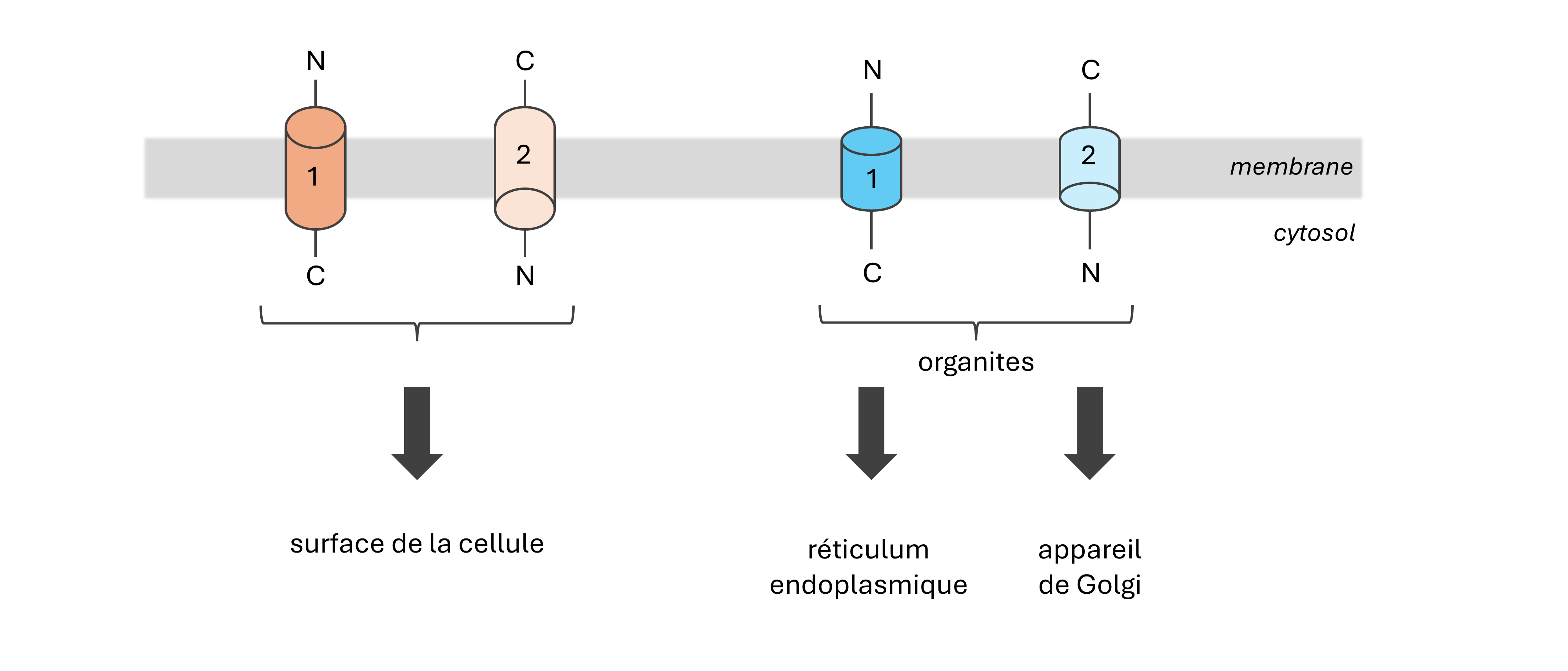
The protein sorting system is based on two elements: the length of the transmembrane domain (length of the cylinders) and the orientation of the proteins in the membrane (type I or type II) © UNIGE – Véronique Rosset
Potential implications
This discovery reveals the address carried by each protein, and how it indicates whether it should be transported to the endoplasmic reticulum or the Golgi apparatus. The next step will be to identify how the cell recognises this address and, like a diligent factor, ensures that each protein is transported to its final destination.